Demand Gen vs Lead Gen — ต่างกันยังไง ใช้เมื่อไหร่ 2026
Demand gen vs lead gen ต่างกันยังไง? เปรียบเทียบ goal, KPI, channel และวิธีใช้ร่วมกันให้ pipeline B2B โตจริง พร้อม framework เลือกใช้ปี 2026

Demand Gen vs Lead Gen — ต่างกันยังไง ใช้เมื่อไหร่ในกลยุทธ์ B2B ปี 2026
Last updated: 2026-06-10
ในวงประชุม B2B marketing แทบทุกครั้งของปี 2026 จะมีคำถามนี้โผล่มาเสมอ — “เราต้องทำ demand gen หรือ lead gen กันแน่?” ทีม sales บ่นว่า MQL ที่ได้คุณภาพต่ำ ปิดดีลไม่ได้ ขณะที่ marketing บอกว่ายิงโฆษณามาเต็มที่แล้ว ปัญหาคือหลายองค์กรไทยยังเข้าใจ demand gen vs lead gen สลับกัน หรือเลือกใช้ผิดจังหวะ ผลคือ CPL ถูกแต่ pipeline ตัน หรือ brand แข็งแต่ revenue ไม่โต
บริษัท B2B ที่ผสาน demand gen เข้ากับ lead gen อย่างเป็นระบบ สร้าง pipeline ได้สูงกว่าคู่แข่งอย่างชัดเจน บทความนี้จะแยกความต่างให้ชัด พร้อม framework เลือกใช้ตาม buyer journey และ stage ของบริษัท
Key Takeaways: Demand generation คือการสร้างความตระหนัก ความต้องการ และ trust ในตลาดทั้งหมด (1-to-many) ส่วน lead generation คือการเก็บ contact info ของคนที่แสดง intent (1-to-1) ทั้งสองไม่ใช่คู่แข่งแต่เป็นเฟส — demand gen สร้าง dark funnel ที่ทำให้ lead gen efficient ขึ้น บริษัท B2B ปี 2026 ควรลงทุน demand gen 60-70% และ lead gen 30-40% โดยวัดผลผ่าน pipeline velocity และ self-reported attribution ไม่ใช่ MQL volume เพียงอย่างเดียว
Demand Gen vs Lead Gen คืออะไร — นิยามที่ชัดเจน
Demand gen vs lead gen ต่างกันที่ “เป้าหมายปลายทาง” — demand generation มุ่งสร้างความต้องการในตลาดให้คนรู้จัก เข้าใจปัญหา และจดจำแบรนด์ก่อนพร้อมซื้อ ส่วน lead generation มุ่งเปลี่ยนคนที่มี intent แล้วให้ฝากข้อมูลติดต่อเพื่อเข้า sales funnel
พูดง่าย ๆ คือ demand gen ทำงานกับคน 97% ที่ยังไม่พร้อมซื้อ (out-of-market) ส่วน lead gen ทำงานกับคน 3% ที่กำลังหา solution ตามโมเดล 95-5 Rule ของ LinkedIn B2B Institute
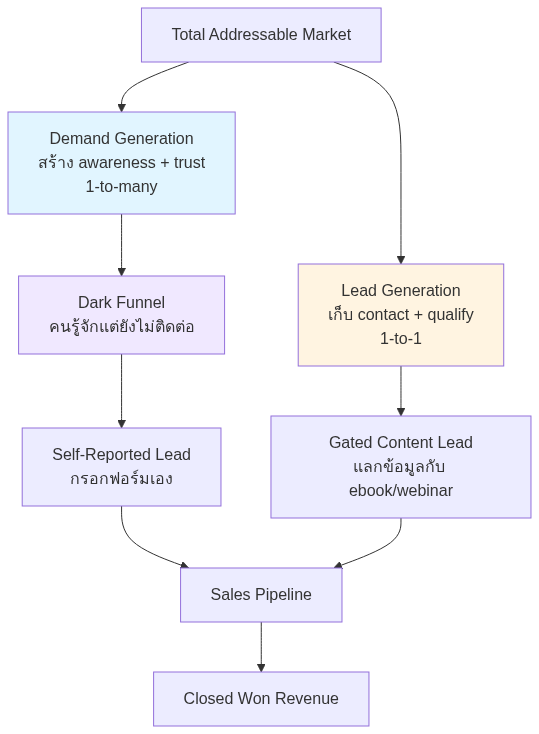
Demand Generation — สร้างตลาด
Demand gen ลงทุนใน content ที่ “ให้ความรู้ฟรี” โดยไม่ขอข้อมูลแลก เช่น podcast, YouTube series, LinkedIn thought leadership, organic SEO และ paid social แบบ awareness ผลลัพธ์วัดยากในระยะสั้น แต่สร้าง compound effect ระยะยาว
Lead Generation — เก็บเกี่ยวความต้องการ
Lead gen ใช้ gated content (ebook, whitepaper, webinar), form, demo request และ paid search ที่จับ high-intent keyword คนที่กรอกฟอร์มมักอยู่ใน decision stage แล้ว — KPI วัดง่าย เช่น CPL, MQL, SQL, conversion rate
ความสับสนที่พบบ่อย
หลายทีมเรียก lead gen ว่า demand gen เพราะคิดว่า “ก็สร้าง demand เหมือนกัน” — แต่จริง ๆ การยิง Facebook Lead Ad แลก ebook คือ lead capture ไม่ใช่ demand creation อ่านเพิ่มเรื่อง measurement framework ได้ที่ Attribution Model B2B Guide 2026
ความแตกต่างหลัก 5 มิติ — Goal, KPI, Channel, Content, Timeline
เมื่อเข้าใจนิยามแล้ว ลงรายละเอียดว่า demand gen vs lead gen ต่างกันอย่างไรในเชิงปฏิบัติ — ทีม marketing ที่แยกสองเรื่องนี้ไม่ชัด มักวัดผลด้วย metric เดียวกัน ทำให้ตัดสินใจผิดทุกไตรมาส
เป้าหมายและ KPI
| มิติ | Demand Generation | Lead Generation |
|---|---|---|
| Goal | สร้าง awareness + trust + category | Capture intent + book meeting |
| Primary KPI | Branded search lift, share of voice, pipeline influenced | MQL, SQL, CPL, conversion rate |
| Time to result | 6-12 เดือน | 1-3 เดือน |
| Budget split (B2B 2026) | 60-70% | 30-40% |
| Attribution | Self-reported, multi-touch | Last-click, form fill |
Channels ที่ใช้ต่างกัน
Demand gen channels เน้น distribution กว้าง — LinkedIn organic, YouTube, podcast sponsorship, SEO content hub, paid social awareness, PR และ community building ส่วน lead gen channels เน้น conversion — Google Ads search, LinkedIn Lead Gen Form, webinar registration, retargeting และ landing page เฉพาะกิจ
Content ที่ต่างกันโดยสิ้นเชิง
Demand gen content ตอบคำถาม “ทำไม” และ “อะไร” — ungated, shareable, opinion-led เช่น “ทำไม attribution model แบบ last-click ถึงตายแล้วในปี 2026” Lead gen content ตอบคำถาม “ยังไง” — gated, actionable เช่น “Checklist 47 ข้อสำหรับ migrate GA4 + Server-side tracking”

Funnel Position
Demand gen ครอบคลุม top + middle funnel (awareness → consideration) ส่วน lead gen เน้น bottom funnel (decision → action) ทีมที่เก่ง demand gen จะเห็น direct traffic และ branded search เพิ่มขึ้น ขณะที่ทีมที่เก่ง lead gen จะเห็น form submission และ demo request เพิ่มขึ้น — แต่ถ้า demand gen ไม่แข็ง lead gen จะมี CPL สูงขึ้นเรื่อย ๆ เพราะต้องไป “ซื้อ” คนที่ไม่รู้จักเรา
Mindset ของทีม
Demand gen ต้อง patient + brand-led ส่วน lead gen ต้อง analytical + performance-led — สอง mindset นี้มักขัดกันในองค์กรเดียว จึงควรมี KPI แยกชัดเจน ดูตัวอย่างการ setup tracking แยก campaign ได้ที่ GA4 + GTM + Conversion API Setup Guide
เมื่อไหร่ควรเลือก Demand Gen เมื่อไหร่ควรเลือก Lead Gen
คำตอบสั้น ๆ คือ ต้องทำทั้งคู่ แต่สัดส่วนต่างกันตาม stage บริษัท category awareness และ sales cycle — การเลือกผิดทำให้ ROI หาย 30-50%
Stage 1: Startup / New Category (0-2 ปี)
ถ้าคุณขาย solution ที่ตลาดยังไม่รู้ว่ามีปัญหา (เช่น CDP สำหรับ B2B ไทย) — demand gen ต้องมาก่อนเป็นสัดส่วนหลัก เพราะ lead gen ที่ตลาดยังไม่ educate จะได้แต่ lead งง ๆ ที่ sales ปิดไม่ได้ ลงทุน content hub, podcast และ founder-led LinkedIn ก่อน
Stage 2: Growth Stage / Known Category (2-5 ปี)
ตลาดรู้จัก category แล้ว แข่งกันที่ positioning — สมดุล demand gen 60% : lead gen 40% ลงทุน thought leadership + SEO ขณะเดียวกันยิง paid search keyword bottom-funnel เช่น “เปรียบเทียบ X กับ Y”
Stage 3: Mature / Established (5+ ปี)
Brand แข็งแล้ว focus ที่ pipeline efficiency — demand gen 50% : lead gen 50% หรือบางองค์กรเทไป lead gen 60% เพราะ demand มีอยู่แล้ว เหลือแค่ capture ให้ทัน
Decision Framework: 3 คำถามก่อนตัดสินใจ
- Sales cycle ยาวกี่เดือน? ถ้า > 6 เดือน → demand gen สำคัญกว่า เพราะ buyer ตัดสินใจจาก trust สะสม
- Average deal size? ถ้า > 500k บาท/ดีล → demand gen เพราะ committee buying ต้องการ brand familiarity
- Category awareness? ถ้าคนยังไม่รู้ว่าปัญหานี้มี solution → demand gen ต้องมาก่อน
ถ้ายังไม่แน่ใจว่า budget ควรไปทาง paid channel ไหน อ่าน Meta Ads Guide Thailand และ Google Ads Guide Thailand เพื่อเทียบ intent level ของแต่ละ platform
วิธีผสาน Demand Gen + Lead Gen ให้ทำงานร่วมกัน
จุดที่ทีม B2B ไทยมักพลาดคือ แยกสองทีมโดยไม่มี handoff — demand gen ทำ content แล้ววัดไม่ได้ lead gen ยิงโฆษณาแล้วได้ lead คุณภาพต่ำ การผสานต้องเริ่มจาก measurement framework ที่มองภาพรวม
1. Single Source of Truth ผ่าน CRM + Self-Reported Attribution
เพิ่ม field “คุณรู้จักเราจากไหน?” ใน form ทุกตัว — ข้อมูลนี้บอกว่า demand gen channel ใดสร้าง pipeline จริง ไม่ใช่แค่ last-click ของ Google Ads
2. Dark Funnel Tracking
ใช้ branded search volume, direct traffic และ LinkedIn organic engagement เป็น leading indicator ของ demand gen — ถ้าตัวเลขเหล่านี้ขึ้น lead gen จะ efficient ขึ้นใน 60-90 วัน
3. Content Recycling: 1 Pillar → 10 Lead Magnets
นำ insight จาก demand gen content (podcast, long-form post) มาทำเป็น gated asset สำหรับ lead gen เช่น podcast ep พูดเรื่อง attribution → ทำ template Looker Studio dashboard ให้ download อ่านเรื่อง template ได้ที่ Looker Studio Dashboard B2B Template
4. Retargeting Sequence ตาม Engagement
ยิง ad lead gen เฉพาะคนที่ engage demand gen content ≥ 2 ครั้ง — CPL ลดลงอย่างเห็นได้ชัด และ MQL-to-SQL rate สูงขึ้นชัดเจน ตั้งค่า audience ได้ผ่าน Facebook Pixel + Conversion API Setup
ผิดพลาดที่พบบ่อย 5 ข้อ + วิธีแก้
- วัด demand gen ด้วย CPL — Demand gen ไม่ใช่ direct response ใช้ branded search lift, share of voice, pipeline influenced แทน
- Gate ทุก content — บังคับกรอกฟอร์มก่อน download ทำให้ reach ตก 80% และคนไม่เห็น brand เลย ปล่อย top-funnel content ungated เสมอ
- ทำ lead gen ก่อน demand gen — ในตลาดที่ category ยังใหม่ จะได้แต่ lead งง ๆ ที่ไม่เข้าใจปัญหา ควร educate ก่อน 6-12 เดือน
- ใช้ last-click attribution อย่างเดียว — ทำให้ทุก credit ไปที่ Google Ads brand keyword ทั้งที่ demand gen เป็นคนสร้าง demand นั้น ใช้ multi-touch + self-reported ร่วมด้วย
- แยกทีม demand กับ lead เด็ดขาด — ทำให้ message ไม่สอดคล้อง buyer สับสน ควรมี content calendar รวม และ weekly sync
Real-world Example
📝 Placeholder: ทีม Adsitec กำลังรวบรวม case study ของลูกค้า B2B SaaS ไทยที่เปลี่ยนจาก lead gen-only มาเป็น demand-led strategy และเห็น pipeline เพิ่มขึ้นอย่างชัดเจน — จะอัปเดตในเวอร์ชันถัดไปของบทความนี้ ถ้าต้องการแชร์ case ของคุณ ติดต่อทีม editorial ได้
ระหว่างนี้ศึกษาแนวทางของทีมที่เปลี่ยนจาก MQL-based goal เป็น pipeline-based goal และเห็น ARR เติบโตอย่างชัดเจน
FAQ
Demand gen แทน lead gen ได้ไหม?
ไม่ได้ — demand gen สร้าง demand แต่ไม่มี mechanism เก็บ contact ให้ sales ติดต่อ บริษัทยังต้องมี lead gen เพื่อ capture intent แต่ demand gen ทำให้ lead gen ทำงานง่ายขึ้นมาก
MQL กับ demand gen ต่างกันไหม?
MQL เป็น output ของ lead gen ส่วน demand gen สร้าง “demand unit” ที่ยังไม่เป็น MQL — คนรู้จัก trust แบรนด์ แต่ยังไม่กรอกฟอร์ม วัดผ่าน branded search และ direct traffic แทน
Budget เริ่มต้นสำหรับ demand gen ควรเท่าไหร่?
ขั้นต่ำ 30,000-50,000 บาท/เดือนสำหรับ B2B SME ไทย เพื่อทำ content + paid distribution บน LinkedIn/YouTube ถ้าน้อยกว่านี้ ผลลัพธ์จะกระจัดกระจายเกินจะวัด
Demand gen วัดผลยังไงให้ board เห็น ROI?
ใช้ 3 metric หลัก: (1) Branded search volume ใน Google Search Console (2) Direct traffic ใน GA4 (3) Pipeline-influenced revenue จาก self-reported attribution ใน CRM — ทั้งหมดเทียบ MoM และ YoY
ควรจ้าง agency หรือทำ in-house?
Demand gen ต้องการ founder voice + brand POV จึง in-house ดีกว่า ส่วน lead gen execution (paid ads, landing page, automation) จ้าง agency ได้ อ่านเปรียบเทียบที่ In-house vs Agency Cost
สรุป + ขั้นตอนต่อไป
Demand gen vs lead gen ไม่ใช่คำถามว่า “เลือกอันไหน” แต่เป็น “ผสมยังไง” — 3 takeaway สำคัญ:
- Demand gen สร้างตลาด lead gen เก็บเกี่ยว — ขาดด้านใดด้านหนึ่ง pipeline จะไม่ sustainable
- สัดส่วนต้องตาม stage — Startup เน้น demand 70%, Mature สมดุล 50/50
- วัดผลด้วย pipeline ไม่ใช่ MQL — Self-reported attribution + branded search lift บอกความจริงมากกว่า last-click
ขั้นตอนต่อไป: audit budget marketing ปัจจุบันของคุณ — ถ้า > 80% ลงไปที่ lead gen channel แสดงว่ากำลังพึ่ง demand ที่คนอื่นสร้างไว้ ลองอ่าน Attribution Model B2B Guide 2026 เพื่อปรับ measurement ก่อน หรือดู pillar รวม B2B Tactics Guide สำหรับ framework ครบชุด และ subscribe newsletter Adsitec เพื่อรับ MarTech insight ทุกสัปดาห์