Customer Journey B2B Mapping — Template + คู่มือ 2026
คู่มือ Customer Journey B2B Mapping ฉบับสมบูรณ์ พร้อม template 5 stages + ตัวอย่างจริง สำหรับนักการตลาด B2B ไทย เริ่มทำได้ทันที

Customer Journey B2B Mapping — Template + คู่มือสร้าง Map ปี 2026
Last updated: 2026-06-14 — โดย Brad K
ในปี 2025 Gartner รายงานว่า buyer องค์กรใช้เวลาส่วนใหญ่ของ purchase cycle ไปกับการ research ก่อนคุยกับ sales เลยด้วยซ้ำ (Gartner B2B Buying Journey) — นั่นหมายความว่าถ้าคุณยังคิดว่า customer journey b2b มีแค่ “รู้จัก → ซื้อ → ปิดดีล” คุณกำลังพลาด touchpoint สำคัญที่สุด 5-7 จุดในเส้นทางลูกค้า
ปัญหาที่ผมเจอบ่อยที่สุดเวลาไป workshop กับทีมการตลาด B2B ไทยคือ “เรามี persona แล้ว แต่ไม่รู้จะ map journey ยังไง” — แล้วสุดท้ายก็ลอก template ของ B2C มาใช้ ทั้งที่ B2B มี buying committee 6-10 คน, sales cycle 3-12 เดือน, และ touchpoint ที่ซับซ้อนกว่ามาก
บทความนี้คุณจะได้: (1) Framework 5 stages ของ customer journey b2b แบบที่ใช้จริงในตลาดไทย (2) Template ที่ copy ไปใช้ได้เลย (3) ตัวอย่างจาก SaaS B2B ที่ทำให้ pipeline เติบโตอย่างชัดเจน (4) Common pitfalls 5 ข้อพร้อมวิธีแก้
Key Takeaways: Customer journey b2b ต่างจาก B2C ตรงที่มี buying committee, multiple touchpoints, และ rational decision-making — ต้อง map ทั้ง stages (Awareness → Advocacy), personas (Economic/Technical/User buyer), และ channels (paid, owned, earned) พร้อมกัน เครื่องมือที่ขาดไม่ได้คือ Journey Map Template ที่เชื่อม touchpoint กับ KPI และ marketing automation — ทีมที่ทำ mapping ดีจะลด CAC ได้ชัดเจน และเพิ่ม conversion rate ตลอด funnel ได้อย่างมีนัยสำคัญภายในไม่กี่เดือน
Customer Journey B2B คืออะไร และต่างจาก B2C ยังไง
Customer journey b2b คือแผนภาพแสดง ทุก touchpoint ที่ลูกค้า B2B สัมผัสกับแบรนด์ตั้งแต่ก่อนรู้จักจนเป็นลูกค้าประจำ ครอบคลุม channel ทั้ง paid, owned, earned และเชื่อมกับ buying committee (ไม่ใช่บุคคลคนเดียว) — เป้าหมายคือเข้าใจ emotion, pain point, และ decision criteria ในแต่ละจุด เพื่อออกแบบ content + experience ให้ตรงจริต

ความต่างหลักจาก B2C
| มิติ | B2C Journey | B2B Journey |
|---|---|---|
| ผู้ตัดสินใจ | 1 คน | 6-10 คน (buying committee) |
| Cycle length | นาที-วัน | 3-12 เดือน |
| Touchpoints | 5-10 จุด | 20-30+ จุด |
| Decision | Emotional + impulse | Rational + risk-averse |
| Content depth | สั้น, ภาพ, viral | Long-form, whitepaper, case study |
ทำไม B2B ต้อง map journey อย่างจริงจัง
เพราะ การตัดสินใจซื้อส่วนใหญ่ เกิดก่อน sales จะเข้าถึง buyer — ถ้าคุณไม่รู้ว่าลูกค้าค้นอะไรใน Google, ดู review ที่ไหน, อ่าน blog ใคร คุณจะ “หายไป” จาก consideration set โดยไม่รู้ตัว การทำ mapping ช่วยให้คุณวาง content + ad ตรงจุดที่ buyer อยู่จริง ไม่ใช่ที่คุณเดาว่าเขาอยู่
5 Stages ของ Customer Journey B2B (Framework สำหรับตลาดไทย)
Stage 1: Awareness — รู้ว่า “มีปัญหา”
ผู้ใช้ยังไม่รู้จักบริษัทคุณ แต่กำลัง search ปัญหา เช่น “ทำไม CAC เพิ่มขึ้น” หรือ “B2B leads คุณภาพต่ำลง”
Touchpoint หลัก: Google search, LinkedIn post, Industry report, Podcast
Content ที่ใช้: Blog SEO, infographic, organic social
KPI: Impression, organic traffic, time-on-page
Stage 2: Consideration — หาทางออก
เริ่มเปรียบเทียบ category ของ solution เช่น “Marketing automation vs CRM” หรือ “In-house vs agency”
Touchpoint หลัก: Comparison guide, YouTube review, Webinar
Content ที่ใช้: Long-form guide, framework, comparison table
KPI: MQL, content download, email signup
อ่านเสริม: In-house vs Agency ต้นทุนจริง — เป็นตัวอย่าง content ที่จับ buyer ใน stage นี้พอดี
Stage 3: Evaluation — เลือก Vendor
Shortlist เหลือ 3-5 ราย เริ่มขอ demo, อ่าน case study, ดู review ใน G2/Capterra
Touchpoint หลัก: Sales demo, case study, customer reference call
Content ที่ใช้: Case study, ROI calculator, product comparison
KPI: SQL, demo booked, proposal request
Stage 4: Decision — ปิดดีล
Buying committee ประชุม, negotiate price, ตรวจ contract — stage ที่ marketing ส่งไม้ต่อให้ sales อย่างเป็นทางการ
Touchpoint หลัก: Sales call, contract, procurement review
Content ที่ใช้: Pricing page, ROI proof, security/compliance doc
KPI: Win rate, deal size, sales cycle length
Stage 5: Advocacy — ลูกค้าบอกต่อ
ลูกค้าใช้แล้วได้ผล → expansion, referral, case study, review — stage ที่ B2B ไทยส่วนใหญ่ “ลืม” แต่ทำเงินดีที่สุด
Touchpoint หลัก: Customer success program, NPS survey, referral incentive
Content ที่ใช้: Customer success story, community, exclusive event
KPI: NRR, NPS, referral rate, LTV
Template Customer Journey Mapping (Copy ไปใช้ได้เลย)
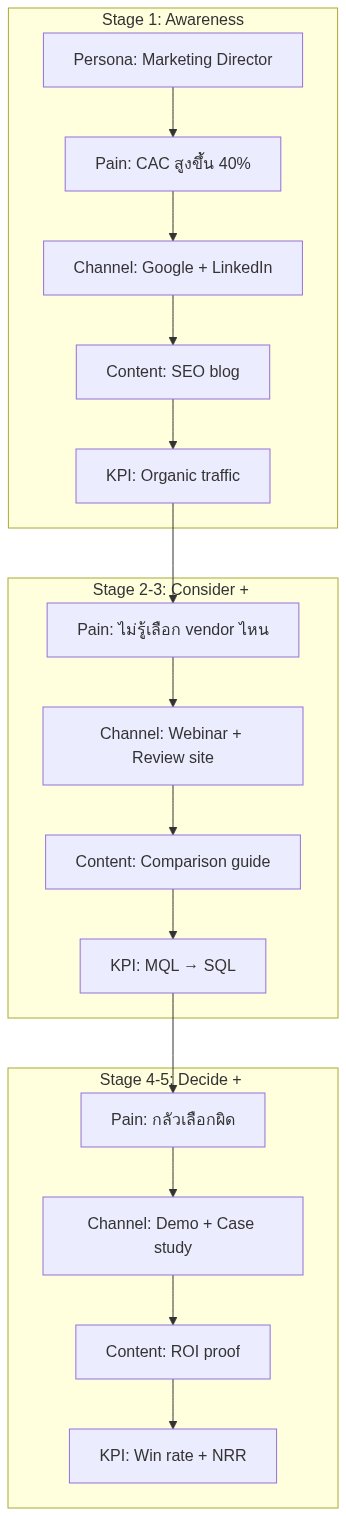
6 คอลัมน์ที่ต้องมีใน template ทุกตัว
- Stage — Awareness, Consideration, Evaluation, Decision, Advocacy
- Persona + Role — Economic buyer / Technical buyer / End user
- Goal & Pain — เขาต้องการอะไร และอะไรขวางอยู่
- Touchpoint & Channel — เจอแบรนด์เราที่ไหน
- Content & Asset — เราจะให้อะไร
- KPI & Tool — วัดยังไง ใช้เครื่องมืออะไร
Buying Committee Roles ที่ B2B ไทยมักลืม
- Economic buyer — มีอำนาจอนุมัติงบ (CFO, CEO) → ต้องเห็น ROI
- Technical buyer — ตรวจ feasibility (CTO, IT) → ต้องเห็น integration + security
- User buyer — คนใช้จริง (Marketing manager) → ต้องเห็น usability
- Champion — คนผลักดันภายใน → ต้องมี ammo (data, case study) ช่วยเขา sell ภายใน
เครื่องมือที่ใช้ทำ Mapping
| เครื่องมือ | จุดเด่น | ราคา (บาท/เดือน) |
|---|---|---|
| Miro / Mural | Collaborative + template เยอะ | ~300-800 |
| Lucidchart | ทำ diagram + flowchart ดี | ~250-600 |
| Figma + FigJam | สำหรับทีม design อยู่แล้ว | ฟรี-500 |
| Notion + database | Lightweight, link กับ doc ได้ | ฟรี-400 |
💡 สำหรับการเชื่อม journey กับ data จริง ดูเพิ่มที่ MarTech Analytics & Tracking Guide — เรื่อง stitching identity ข้าม touchpoint
วิธีเก็บข้อมูลเพื่อสร้าง Journey Map ที่ใช้ได้จริง
Qualitative — สัมภาษณ์ลูกค้า 8-12 ราย
ถามคำถามเปิด: “เล่าเส้นทางจากตอนที่เริ่มมีปัญหา จนเลือกเรา” — บันทึก emotion + objection ในแต่ละ stage ไม่ใช่แค่ action
Quantitative — Pull data จาก analytics
- GA4 — entry page, conversion path, time-to-conversion
- CRM — sales cycle length, win/loss reason, deal size by source
- Heatmap (Hotjar/Clarity) — engagement กับ key page
อ่านวิธี set up tracking ที่จับ touchpoint ได้ครบใน Attribution Model B2B Guide
Triangulate — รวม 2 ฝั่งเข้าด้วยกัน
Qualitative บอก “ทำไม”, Quantitative บอก “อะไร + เท่าไหร่” — ถ้ามีแค่อย่างเดียว map จะเอียง
ผิดพลาดที่พบบ่อย 5 ข้อ (พร้อมวิธีแก้)
1. Map จาก persona เดียว — B2B มี 6-10 คนใน committee แต่ส่วนใหญ่ทำแค่ “Marketing Manager”
วิธีแก้: ทำ map อย่างน้อย 3 personas (Economic, Technical, User) แล้ว overlay ดู conflict
2. ละเลย stage Advocacy — มอง journey จบที่ “ปิดดีล”
วิธีแก้: เพิ่ม retention + expansion เข้า map — เพราะ NRR ปกติทำเงินมากกว่า new logo
3. ใช้ template B2C — touchpoint น้อยเกินไป, ไม่มี buying committee
วิธีแก้: ใช้ B2B-specific framework (เช่น Forrester B2B Buying Cycle) เป็น base
4. ไม่ update map — ทำครั้งเดียวแล้วทิ้ง 2 ปี
วิธีแก้: Quarterly review — ตรวจกับ sales/CS ว่า touchpoint จริงเปลี่ยนหรือยัง
5. ไม่เชื่อมกับ tooling — map อยู่ใน Miro, automation อยู่ใน HubSpot, ไม่คุยกัน
วิธีแก้: Map ทุก stage → trigger ใน marketing automation (email, ad audience, lead score) อย่างเป็นระบบ
ตัวอย่างเชิงกลไก: SaaS B2B ที่ Pipeline เติบโตจากการทำ Mapping
ตัวอย่างเชิงกลไก (สมมติ) ของสิ่งที่การทำ customer journey b2b mapping ช่วยได้กับทีม SaaS/Service:
- ก่อน mapping: CAC สูง, อัตรา MQL→SQL ต่ำ และ sales cycle ยาว
- หลัง mapping + ปรับ content/channel ตาม stage: CAC ลดลง, อัตรา MQL→SQL เพิ่มขึ้น และ sales cycle สั้นลง
สิ่งที่ทำ:
1. แยก content per stage — ไม่ใช่ใช้ “Demo CTA” ทุกหน้า
2. Retarget audience ตาม stage (Awareness → educational ad, Evaluation → case study ad)
3. Lead scoring เชื่อมกับ behavior ใน journey (ดู pricing page = +15 คะแนน)
FAQ
Customer journey b2b ต่างจาก buyer journey ยังไง
Buyer journey = มุมมองของ buyer อย่างเดียว (Awareness → Consideration → Decision)
Customer journey = มุมมองของ customer ตลอด lifecycle รวม onboarding, retention, advocacy ด้วย — B2B ปกติใช้ customer journey เพราะ NRR สำคัญ
ต้องทำ journey map กี่ persona
ขั้นต่ำ 3: Economic buyer, Technical buyer, User buyer — ถ้า product ซับซ้อนอาจเพิ่ม Champion + Influencer อีก 2
ใช้เวลานานแค่ไหนในการสร้าง map ครั้งแรก
ปกติ 3-6 สัปดาห์: สัมภาษณ์ 8-12 customer (1-2 สัปดาห์), pull data + analyze (1-2 สัปดาห์), workshop + visualize (1-2 สัปดาห์) — อย่ารีบ เพราะ map ที่ผิดทำให้ทีมเดินผิดทางทั้งปี
Map ต้อง update บ่อยแค่ไหน
Quarterly review ระดับ touchpoint + KPI, annual review ระดับ stage + persona — ถ้า product/market เปลี่ยนเร็ว (เช่น AI tools 2026) อาจต้อง update ทุก 6 สัปดาห์
Tool ไหนดีที่สุดสำหรับทีมเล็ก
ถ้าเริ่มต้น: Notion + database — ฟรี, link กับ doc + task ได้ดี
ถ้าทีมโต: Miro + integration กับ HubSpot/Salesforce — collaborative + visual ดีกว่า
สรุป + ขั้นตอนต่อไป
3 takeaways หลัก:
- Customer journey b2b ไม่ใช่ funnel — เป็น loop ที่จบที่ Advocacy แล้วกลับมา Awareness ใหม่ผ่าน referral
- Map ต้องมี 3 personas ขั้นต่ำ + เชื่อม touchpoint กับ KPI ที่วัดได้จริง ไม่ใช่ทำเป็นภาพสวยแล้วเก็บลิ้นชัก
- Quarterly review สำคัญพอ ๆ กับการสร้าง map ครั้งแรก — เพราะ buyer behavior เปลี่ยนทุก 6-9 เดือน
ขั้นตอนต่อไป:
- เริ่มจากสัมภาษณ์ลูกค้า 5 รายสัปดาห์นี้ → ดึง pattern → วาด map ฉบับแรก
- อ่านเสริมใน hub Marketing Frameworks Guide สำหรับ framework เสริม (JTBD, ICP, Persona)
- ตั้ง tracking ให้พร้อม per stage ดูที่ GA4 + GTM + Conversion API Setup
ทีม Adsitec ทำงานด้าน B2B marketing strategy + martech — ถ้าอยาก workshop customer journey mapping เป็นกรณี ๆ ทักทายเรามาคุยได้