B2B Content Strategy 2026 — Editorial Calendar + Production
B2B Content Strategy ปี 2026 — สร้าง Editorial Calendar + Production Workflow ที่ scale ได้ พร้อม template + KPI สำหรับทีมการตลาด B2B ไทย

B2B Content Strategy ปี 2026 — Editorial Calendar + Production ที่ Scale ได้
Last updated: 2026-06-05 · ผู้เขียน: Brad K
ทีมการตลาด B2B ไทยจำนวนมากเผยแพร่บทความได้ไม่กี่ชิ้นต่อเดือน และมักบอกว่า “ไม่มีเวลาเขียน” — แต่ความสม่ำเสมอในการเผยแพร่ต่างหากที่สร้าง inbound leads ระยะยาว ความต่างไม่ได้อยู่ที่ “ขนาดทีม” แต่อยู่ที่ b2b content strategy ที่มี editorial calendar + production workflow ชัดเจน บทความนี้จะพาไปดูทั้ง framework การวาง strategy, template ของ editorial calendar ที่ใช้ได้จริง, production pipeline แบบ 4 ขั้น, KPI ที่ควรวัด และ pitfalls 5 ข้อที่ทำให้ทีมส่วนใหญ่ “ทำไม่ทัน” — เพื่อให้ทีม 1-3 คนของคุณเผยแพร่ได้สม่ำเสมอโดยไม่ burnout
Key Takeaways: B2B Content Strategy ที่ scale ได้ต้องประกอบด้วย 3 ส่วน — (1) Pillar-Cluster model จับ search demand แบบเป็นระบบ, (2) Editorial calendar ที่ map กับ buyer journey 3 ขั้น (TOFU/MOFU/BOFU) และมี theme รายเดือนชัดเจน, (3) Production workflow 4 ขั้น (brief → draft → review → publish) ที่กระจายงานเป็น role-based ไม่ใช่ person-based ทีม 2-3 คนเผยแพร่ 8-12 ชิ้น/เดือนได้ถ้ามี template + SOP ที่ดี โดย KPI หลักควรวัด organic traffic, MQL จาก content และ pipeline-influenced revenue
B2B Content Strategy คืออะไร และทำไมต้องมี Editorial Calendar
B2B content strategy คือแผนระยะยาว (6-12 เดือน) ที่กำหนดว่า “จะเขียนเรื่องอะไร, ให้ใครอ่าน, ที่ไหน, ด้วย format อะไร, เพื่อ business outcome ใด” — ต่างจาก “content marketing” ทั่วไปตรงที่ B2B ต้องคิดถึง decision-making unit (DMU) ที่มี 3-5 คน, sales cycle 3-12 เดือน, และ deal size ที่สูงทำให้ ROI ของ 1 บทความวัดยาก
Editorial calendar ไม่ใช่ “ตารางวันที่โพสต์” แต่คือ single source of truth ที่ตอบ 5 คำถาม:
– เดือนนี้ theme อะไร (เช่น Q3 = “Marketing Automation”)
– บทความไหนเป็น pillar, ไหนเป็น cluster
– ใคร own piece ไหน (writer / editor / SEO reviewer)
– buyer stage อะไร (TOFU = awareness, MOFU = consideration, BOFU = decision)
– distribution channel ไหน (organic, LinkedIn, newsletter, paid)
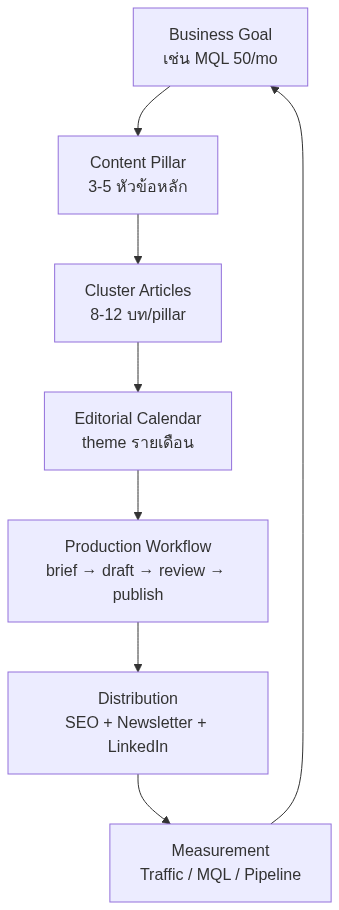
ทีมที่ทำ B2B content แบบ “นึกได้ก็เขียน” จะติด 2 ปัญหา — (1) คอนเทนต์กระจัดกระจาย ไม่ build topical authority และ (2) ไม่มีคนรับผิดชอบชัดเจน งาน stuck อยู่ที่ founder หรือ marketing manager คนเดียว
ทำไม B2B ต้องใช้ Pillar-Cluster Model
Pillar-cluster คือการจัดบทความเป็น hub-and-spoke — pillar (2,500+ คำ) ครอบคลุมหัวข้อใหญ่ + cluster (1,500-2,000 คำ) เจาะ sub-topic แล้ว internal link เข้าหา pillar เพื่อส่ง topical signal ให้ Google ดูตัวอย่างใน Marketing Framework B2B Guide — โครงสร้างนี้ทำให้ pillar rank keyword head term ได้ ส่วน cluster จับ long-tail
วาง B2B Content Strategy ใน 5 ขั้น
1. กำหนด Business Goal ก่อน Content Goal
ห้ามเริ่มจาก “อยาก rank keyword X” — เริ่มจาก business goal เช่น “Q4 ต้อง close 12 deals จาก inbound” แล้วทำ reverse math:
– 12 closed × 25% close rate = 48 SQL
– 48 SQL × 30% SQL→Customer = 160 MQL ต้องได้
– 160 MQL × 3% traffic→MQL = 5,300 organic visits/mo
– 5,300 visits ÷ 250 visits/article = 22 บทความ active ที่ต้อง maintain
ตัวเลขนี้บอกขนาด content engine ที่ต้องสร้าง — ไม่ใช่เดาเอา
2. Topic Research ด้วย Search Demand + Sales Insight
รวม 3 แหล่ง:
– Ahrefs / Semrush — keyword ที่มี volume + commercial intent
– Sales call recordings (Gong, Fathom) — คำถามจริงที่ลูกค้าถามใน demo
– Customer support tickets — pain ที่ลูกค้าเก่าเจอบ่อย
จัดเป็น matrix 2 แกน: search volume × buying intent — ลำดับความสำคัญ high-intent ก่อน ถึง high-volume
3. Map ตาม Buyer Journey
| Stage | % ของ calendar | Format | ตัวอย่าง |
|---|---|---|---|
| TOFU (awareness) | 50% | how-to, guide, glossary | “Attribution model คืออะไร” |
| MOFU (consideration) | 30% | comparison, framework, case | “In-house vs Agency cost” |
| BOFU (decision) | 20% | pricing, demo, ROI calculator | “B2B Ads Agency เลือกยังไง” |
ทีม B2B ส่วนใหญ่เขียน TOFU มากเกินไป (80%+) → traffic เยอะแต่ MQL น้อย — ปรับเป็น 50/30/20 จะเห็น pipeline เร็วขึ้น
4. Editorial Calendar Template (รายเดือน)
structure ที่ใช้ได้จริงใน Notion / Airtable / Google Sheets:
| Column | ตัวอย่างค่า |
|---|---|
| Title | “B2B Content Strategy — Editorial Calendar” |
| Publish Date | 2026-06-05 |
| Pillar | Content & SEO Guide |
| Stage | TOFU |
| Focus Keyword | b2b content strategy |
| Word Count | 1,800 |
| Owner (Writer) | @brad |
| Reviewer | @nat |
| Status | Draft / Review / Scheduled / Published |
| Distribution | SEO + LinkedIn + Newsletter wk24 |
ทุกเดือนกำหนด theme เช่น มิ.ย. = “Content Strategy”, ก.ค. = “Attribution & Tracking” — บทความทุกชิ้นในเดือนนั้น cluster เข้าหา theme เพื่อ build authority แบบ topical
5. Production Workflow 4 ขั้น

แยกบทบาท role-based ไม่ใช่ person-based — writer, editor, SEO reviewer, publisher อาจเป็นคนเดียวกันได้ในทีมเล็ก แต่ “หมวก” ต้องชัด ไม่งั้นจะลืม checklist
Production Pipeline — ทำยังไงให้ Scale ได้
Brief Template ที่ดี = ลดเวลาร่างและรอบแก้ได้มาก
Brief ที่ครบควรมี — focus keyword, search intent (informational/commercial/how-to), target audience persona, outline 5-7 H2, top 3 competitors SERP, internal/external links ที่ต้องใส่, word count, deadline หากใช้ AI ช่วย draft — brief ที่ละเอียดช่วยลดรอบแก้งานได้มาก
ใช้ Template ลด cognitive load
ทีม Adsitec ใช้ markdown template + YAML frontmatter เดียวกันทุกบทความ (title, slug, meta_description, focus_keyword) — writer ไม่ต้องคิดเรื่อง structure ทุกครั้ง เน้นที่เนื้อหา ดูตัวอย่าง pipeline ที่ใช้ใน Looker Studio Dashboard B2B Template สำหรับ measurement side
Batch Production — เขียนเป็น sprint ไม่ใช่ daily
ทีม 2-3 คนเขียน 8 บท/เดือน → กำหนด sprint 2 สัปดาห์:
– สัปดาห์ 1: research + brief 8 บท
– สัปดาห์ 2-3: draft 8 บท (writer)
– สัปดาห์ 4: review + publish (editor)
ไม่ใช่ “วันละ 1 บท” เพราะ context switch กิน productivity 30-40%
AI Assistance ใช้ได้ แต่ห้ามใช้แทน thinking
AI ช่วยได้ใน outline generation, paragraph rewrite, SEO meta — ห้ามใช้สร้าง insight หรือ first-hand experience เพราะ Google’s E-E-A-T ตรวจจับ AI-only content ได้แม่นขึ้นเรื่อยๆ ตั้งแต่ Helpful Content Update 2024
Distribution & Measurement — เผยแพร่แล้วจะวัดยังไง
Distribution 3 ช่องทางหลัก
- Organic SEO — index ภายใน 7-14 วัน, rank ใน 3-6 เดือน
- LinkedIn — แตกเป็น carousel + long-form post พร้อม link
- Newsletter — ส่งให้ subscriber 1,000-5,000 คนสร้าง initial traffic + signal
KPI ที่ควรวัด (ทุก 30 / 90 วัน)
| Metric | Tool | Target ปีแรก |
|---|---|---|
| Organic traffic | GA4 + GSC | +20% MoM |
| Indexed pages | GSC | 80%+ ของที่เผยแพร่ |
| Avg position | GSC | < 20 ใน 90 วัน |
| MQL จาก content | HubSpot / CRM | 15-25% ของ total MQL |
| Pipeline influenced | Attribution model | 30%+ ของ closed deals touch content |
สำหรับ B2B attribution ที่ sales cycle ยาว ดู Attribution Model B2B Guide 2026 — multi-touch attribution จะเห็นภาพ content’s influence ชัดกว่า last-click
Update Cadence — refresh เก่าก่อนเขียนใหม่
บทความที่ rank #5-15 มี ROI ของการ update ที่มักคุ้มกว่าการเขียนใหม่ — ทุกไตรมาส audit:
– เพิ่มสถิติใหม่
– เพิ่ม internal link จากบทความใหม่
– ปรับ title/meta ถ้า CTR ต่ำ
– ขยาย section ที่ rank ใกล้ top 3
ผิดพลาดที่พบบ่อย — 5 Pitfalls + วิธีแก้
1. Theme-less calendar — เขียนตามอารมณ์ ทำให้ไม่ build topical authority
→ แก้: ตั้ง 1 theme/เดือน, ทุกบทความ cluster เข้าหา pillar เดียวกัน
2. ไม่มี SOP / brief template — แต่ละบทความใช้เวลาไม่เท่ากัน writer งง
→ แก้: สร้าง brief template + style guide + checklist publish
3. Founder เป็นคอขวด — รอ founder review ทุกชิ้น 1-2 สัปดาห์
→ แก้: delegate editor authority ให้ marketing lead, founder review แค่ pillar + thought-leadership
4. วัดแค่ traffic ไม่วัด pipeline — content “ดัง” แต่ไม่ generate deal
→ แก้: ติด attribution ที่ map content → MQL → SQL → Deal ใน CRM อ่านวิธีติด GA4 + GTM + Conversion API
5. ไม่ refresh content เก่า — โฟกัสเขียนใหม่อย่างเดียว เนื้อหาเก่า decay
→ แก้: 20% ของ capacity ทุกเดือนใช้ update บทความที่อายุ 6-12 เดือน
Real-world Example
หากต้องการอ้างอิง benchmark สาธารณะ ดู รายงาน B2B Content Marketing ประจำปีของ Content Marketing Institute ซึ่งพบว่าทีมที่มี documented strategy มักได้ผลลัพธ์ดีกว่าทีมที่ไม่มี
FAQ
Q1: ทีม 1 คนทำ B2B content strategy ได้ไหม?
ได้ — แต่ขนาด calendar ต้อง realistic 2-4 บท/เดือน เน้น quality > quantity ใช้ AI ช่วย draft + freelance editor part-time เพื่อ scale บางเดือน
Q2: ควรเขียนกี่บทต่อเดือนถึงเห็นผล?
การเผยแพร่สม่ำเสมอในปริมาณที่มากขึ้นมักได้ inbound leads มากกว่าอย่างชัดเจน แต่ B2B ที่ niche เฉพาะอาจเริ่มที่ 4-6 บท/เดือน + เน้น depth ก็เห็นผลใน 6-9 เดือน
Q3: ใช้ AI เขียนได้เต็ม 100% ไหม?
ไม่ควร — Google Helpful Content Update penalize AI-only content ที่ไม่มี first-hand experience ใช้ AI ใน outline + draft แรก แล้ว human edit เพิ่ม insight + ตัวอย่างจริง
Q4: Pillar 2,500 คำกับ cluster 1,500 คำต่างกันยังไง?
Pillar = หัวข้อใหญ่ keyword head term (เช่น “B2B Content Strategy”) ครอบคลุมกว้าง / Cluster = sub-topic เจาะลึก long-tail (เช่น “editorial calendar template B2B”) แล้ว link เข้า pillar
Q5: ควรใช้เครื่องมืออะไรทำ Editorial Calendar?
Notion (ทีม 1-3 คน), Airtable (ทีม 3-10 คน + automation), Asana/ClickUp (ทีม 10+ คน + project management) — ที่สำคัญคือ template + field ครบ ไม่ใช่ tool
สรุป + ขั้นตอนต่อไป
3 takeaway สำคัญ:
1. เริ่มจาก business goal → reverse math หาขนาด content engine ที่ต้องสร้าง อย่าเริ่มจาก “อยาก rank keyword”
2. Editorial calendar ต้องมี theme รายเดือน + role ชัดเจน — ไม่ใช่แค่ตารางวันเผยแพร่
3. Production workflow 4 ขั้น (brief → draft → review → publish) + batch sprint ทำให้ทีม 2-3 คน scale 8-12 บท/เดือนได้โดยไม่ burnout
ขั้นตอนต่อไป — ถ้ายังไม่มี documented strategy เริ่มจาก map pillar 3-5 หัวข้อแล้ววางปฏิทิน 90 วันแรก อ่านต่อใน MarTech Analytics & Tracking Guide เพื่อเซ็ต measurement side ก่อนเริ่มผลิต หรือ subscribe newsletter เพื่อรับ template editorial calendar + brief ที่ Adsitec ใช้ใน production จริง