Brand Positioning B2B Guide — สร้าง Brand ที่ลูกค้าเลือกก่อนเทียบราคา ปี 2026
brand positioning b2b คือกระบวนการกำหนดที่ทางของแบรนด์ในใจลูกค้า — pillar guide ครบ: framework, process, voice/visual, position statement, case study B2B ไทย

Brand Positioning B2B Guide — สร้าง Brand ที่ลูกค้าเลือกก่อนเทียบราคา ปี 2026
Last updated: 2026-05-28
Key Takeaways: brand positioning b2b คือกระบวนการกำหนด “ที่ทางในใจลูกค้า” ที่ทำให้ B2B brand ถูกเลือก ก่อน การเทียบ feature/price ต่างจาก B2C ที่เน้น emotion + lifestyle, B2B positioning เน้น category clarity (ลูกค้าจัด brand เราอยู่กล่องไหน), differentiation (ต่างจากคู่แข่งยังไง), และ proof (มี evidence ที่ verify ได้) Framework ที่ใช้ได้จริง: 5P — Persona, Problem, Proof, Promise, Personality positioning ที่ work ใน B2B ไทยมัก built บน “niche category” + “specific industry” — ไม่ใช่ general “best CRM” แต่เป็น “CRM สำหรับ Manufacturing SME ไทย” ผลลัพธ์ที่วัดได้: brand search volume, branded vs non-branded traffic ratio, win rate ใน RFP, time-to-close ลดลง
ในตลาด B2B ไทยปี 2025-2026 ทุก category มี competitor 10-50 brand — ลูกค้าตัดสินใจในยุค “information abundance” ที่ความแตกต่างของ feature เกือบจะเท่ากันหมด
แล้วทำไมลูกค้าเลือก brand A ไม่ใช่ brand B?
คำตอบไม่ใช่ราคา ไม่ใช่ feature — แต่คือ brand positioning ที่ทำให้ลูกค้า “อยาก” ทำงานกับ brand ใดมากกว่าตั้งแต่ก่อนคุยกัน
บทความนี้คือ pillar guide ของ brand positioning b2b — ครอบคลุม framework, process step-by-step, voice/visual identity, positioning statement template, และ case study จริงของ B2B ไทย
brand positioning b2b คืออะไร — Definition ที่แม่นยำ
brand positioning b2b คือกระบวนการตัดสินใจและสื่อสารว่า:
1. แบรนด์อยู่ใน category ไหน (ลูกค้าจัดประเภทคุณยังไง)
2. ต่างจากคู่แข่ง ในประเด็นไหนที่ลูกค้าสนใจ
3. มี proof อะไรที่ support claim
4. ใช้ voice + visual สื่อสารยังไงให้ consistent
⚠️ ไม่ใช่:
– ❌ Logo design (visual identity เป็นแค่ส่วนหนึ่ง)
– ❌ Tagline / slogan (output ของ positioning, ไม่ใช่ตัว positioning เอง)
– ❌ “We are the best” (claim ไม่มี proof = brand weakness)
Positioning vs Branding vs Marketing
| Term | คืออะไร | Owner |
|---|---|---|
| Positioning | ที่ทางใน mind ของลูกค้า | Founder + Executive |
| Branding | Visual + Voice + Experience expression | Brand Manager + Designer |
| Marketing | Tactics ที่ใช้ communicate positioning | Marketing Team |
Positioning = foundation — ทำผิดที่ฐาน ทำเก่งเท่าไหร่ที่ tactic ก็ไม่ work
ทำไม B2B ต้องสนใจ Brand Positioning
หลายคนคิดว่า “B2B = logic ไม่ใช่ emotion = brand ไม่สำคัญ” — ผิด
จาก Edelman-LinkedIn B2B Thought Leadership Impact Study 2024 พบว่า:
- 75% ของ B2B buyer ตัดสินใจขั้นต้นจาก brand reputation ก่อนเช็ค feature
- decision maker จำนวนมากบอกว่าพร้อมเลือก vendor ที่ trust แม้ราคาสูงกว่าคู่แข่ง
- 86% ของ B2B buyer เคย “ตัด” vendor ออกตั้งแต่ early stage เพราะ brand experience ไม่ดี
ผลกระทบที่วัดได้:
– Brand-strong B2B: sales cycle สั้นลงอย่างชัดเจน, win rate สูงขึ้นอย่างมีนัยสำคัญ
– Brand-weak B2B: ต้อง compete ที่ราคาเสมอ → margin ลดลง
The 5P Framework — Brand Positioning ที่ใช้ได้จริง
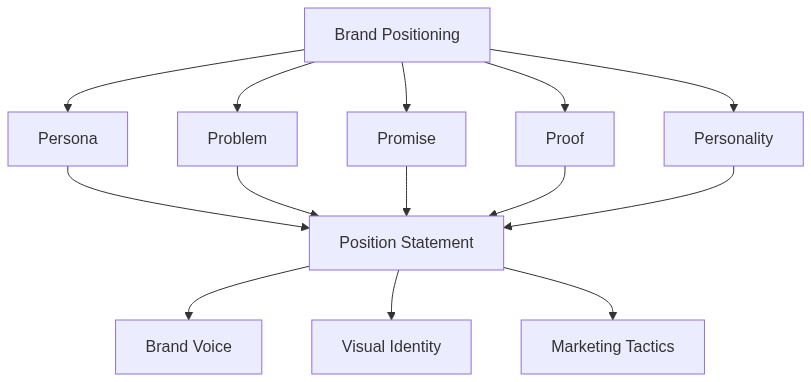
1. Persona — ICP ที่เจาะจง
ไม่ใช่ “ทุก B2B” — แต่คือ:
– Industry เฉพาะ (Manufacturing, FinTech, Healthcare, ฯลฯ)
– Size range ที่ตรง (10-50 / 50-500 / Enterprise)
– Role of decision maker (Founder / VP / Manager / Specialist)
– Region / culture (Thai SME ≠ MNC subsidiary in Thailand)
ตัวอย่าง persona ที่แคบพอ:
“VP of Operations ของ manufacturing company ไทย ขนาด 100-500 พนักงาน revenue 500M-2B บาท ที่ใช้ ERP ของ Microsoft Dynamics หรือ SAP มากกว่า 5 ปี และมี pain เรื่อง data silos ระหว่าง production + finance”
แคบมาก? ใช่ — แต่นี่คือ positioning ที่ลูกค้าเป้าหมายจะรู้สึกว่า “นี่คือสำหรับฉันโดยเฉพาะ”
2. Problem — Pain ที่ specific
Pain ที่ generic = positioning ที่อ่อน:
– ❌ “ช่วยให้บริษัทโตเร็วขึ้น”
– ❌ “ลดต้นทุน เพิ่มประสิทธิภาพ”
Pain ที่ specific = positioning ที่แข็ง:
– ✅ “ทีม Sales B2B ไทยส่งเดือนละ 50 quote แต่ปิดแค่ 8 — เพราะไม่มี follow-up automation ที่ทำงาน 24/7”
– ✅ “Manufacturing SME ไทยใช้ ERP มา 10 ปี แต่ยังต้อง export Excel ทุกสัปดาห์เพื่อทำ report ให้ CEO”
3. Promise — สิ่งที่คุณ deliver
Promise = “ผลลัพธ์เฉพาะ ที่ verifiable”:
– ❌ “ทำให้คุณประสบความสำเร็จ”
– ✅ “ลด time-to-quote จาก 3 วันเป็น 4 ชั่วโมง”
– ✅ “ปิด deal ขนาด 500K+ ได้บ่อยขึ้นอย่างชัดเจนภายใน 6 เดือน”
Promise ต้องเป็นสิ่งที่ measurable + time-bound
4. Proof — Evidence ที่ support
โดยไม่มี proof = empty claim:
Proof types สำหรับ B2B:
– Quantitative: “ลูกค้า 247 ราย, save เฉลี่ย 18 ชั่วโมง/สัปดาห์”
– Case studies: 3-5 case ที่ deep dive
– Customer logo: brand ที่รู้จัก
– Testimonial video: มี face + name + company
– Third-party: Analyst report, award, certification
– Founder credibility: background ใน industry นั้น ๆ
– Open methodology: explain “how” ที่ transparent
5. Personality — Voice + Tone
Personality บอกว่า brand คุณ “เป็นคนแบบไหน”:
| Dimension | Spectrum |
|---|---|
| Formal ↔ Casual | Suit-and-tie / Smart casual / T-shirt |
| Serious ↔ Playful | Academic / Professional / Witty |
| Expert ↔ Approachable | Authority / Peer / Mentor |
| Conservative ↔ Bold | Established / Modern / Edgy |
| Restraint ↔ Emotional | Data-driven / Balanced / Story-led |
Insight: B2B ที่ standout ในไทยปี 2026 มัก Approachable + Playful + still expert — เพราะ industry default = formal/serious
Positioning Process — Step-by-step 8 สัปดาห์
Week 1-2: Discovery
- Internal workshop: founder + executive + sales + product
- Customer interview: 8-12 ลูกค้าปัจจุบัน + 4-6 lost deal
- Competitor audit: 5-10 brand ในตลาด — messaging + visual + voice
Week 3-4: Synthesis
- รวบรวม insight จาก discovery
- สร้าง positioning hypothesis 2-3 ตัว
- Test กับ small group (5-7 prospect/customer)
Week 5-6: Definition
- เลือก positioning ที่ resonate ที่สุด
- เขียน position statement + brand pillar
- กำหนด brand voice guide + visual direction
Week 7-8: Activation
- Apply positioning ใน website + sales deck + LinkedIn
- Brief team ทั้งหมด (sales, marketing, customer success)
- ตั้ง brand consistency check workflow
Position Statement — Template ที่ใช้ได้
Geoffrey Moore Template
FOR [target customer]
WHO [statement of pain/need]
OUR [product/service/category]
IS A [product category]
THAT [statement of key benefit]
UNLIKE [primary competitive alternative]
WE [statement of primary differentiation]
ตัวอย่าง (B2B Thai marketing agency):
FOR manufacturing SME ไทย ขนาด 100-500 พนักงาน
WHO ต้องการ digital marketing แต่ไม่มีทีม in-house + ไม่อยากใช้ agency ที่ไม่เข้าใจ industrial buyer
Adsitec
IS A marketing & MarTech agency
THAT focus เฉพาะ B2B industrial vertical และมี certified GA4/HubSpot specialist
UNLIKE generalist agency ที่ทำทั้ง B2C + B2B
WE bring 8+ years of B2B-only experience + open methodology ที่ลูกค้าทำเองได้
Simpler “Crowley” Template
[Brand] is the [category]
for [target customer]
that [unique value].
ตัวอย่าง:
Adsitec is the B2B-only marketing agency for Thai industrial SME that delivers transparent methodology + measurable ROI.
Brand Voice — เขียนยังไงให้ consistent
Voice Guide Components
1. Brand Adjectives (3-5 คำ)
ใช้บรรยาย “voice” ของ brand
– ตัวอย่าง: Direct / Educational / Slightly playful / Evidence-based / Pragmatic
2. Tone Spectrum
แต่ละ context tone ต่างกัน:
– Sales page: Confident + Concrete
– Blog: Educational + Approachable
– Support: Empathetic + Solution-focused
– LinkedIn: Conversational + Insight-led
– Email: Warm + Direct
3. Do’s + Don’ts
ชัดเจน:
– ✅ Do: ใช้ short sentence (≤ 20 คำ)
– ✅ Do: ตัวเลข specific มีที่มา
– ❌ Don’t: คำว่า “ปฏิวัติ”, “best-in-class”, “next-gen”
– ❌ Don’t: passive voice มากกว่า 30%
– ❌ Don’t: emoji ใน technical content
4. Sample Sentence Pairs
แสดง before/after:
– ❌ “Our innovative solution leverages cutting-edge technology to optimize your workflow.”
– ✅ “ลด time-to-quote จาก 3 วันเหลือ 4 ชั่วโมง ด้วย workflow automation ที่ tested กับ 200+ B2B ในไทย”
Visual Identity — เริ่มจากตรงไหน
Visual identity = expression ของ positioning ผ่าน visual
5 องค์ประกอบหลัก:
| Component | สำคัญแค่ไหน |
|---|---|
| Logo | Foundation (ใช้ทุกที่) |
| Color palette | Primary + Secondary + Neutral (3-5 สี) |
| Typography | Heading + Body + Mono (2-3 font) |
| Photography style | Real photo / Illustration / Mixed |
| UI components | Button, card, icon style |
Common B2B Visual Patterns ปี 2026
Trend ที่ work:
– Minimal + spacious (less is more)
– Mono/duo-tone palette + 1 accent color
– Editorial typography (Inter, IBM Plex, Helvetica Now)
– Real product screenshot > stock photo
– Mermaid/Excalidraw-style diagram
Trend ที่ “overdone”:
– Gradient + glassmorphism
– 3D abstract shapes
– Stock photo คนใส่สูทประชุม
Case Study — B2B Brand Positioning ในไทย
Case 1: B2B SaaS (CRM for SMB Thailand)
Before:
– Position: “All-in-one CRM”
– Compete กับ HubSpot, Salesforce, Pipedrive
– Tagline: “Manage your sales better”
– ROI ad: ตัน ROAS ไม่ขยับ
After (re-position):
– Position: “CRM สำหรับ SMB ไทย ที่ใช้ภาษาไทย support + integrate กับ LINE OA”
– Compete กับ “manual Excel” และ “international CRM ที่ไม่ support LINE”
– Tagline: “CRM ที่ทีมขายไทยใช้แล้วไม่ขัด”
– ROAS ปรับตัวดีขึ้นชัดเจนหลัง re-position
Insight: narrow positioning → bigger market share ในกลุ่มเป้าหมาย
Case 2: B2B Industrial Equipment
Before:
– Position: “Quality industrial equipment supplier”
– Sales cycle เฉลี่ย 8 เดือน
– Win rate 18%
After:
– Position: “Equipment supplier ที่มี Service Level Agreement 4-hour response รับประกัน 24/7 สำหรับ Manufacturing”
– Visual: เปลี่ยน photography จาก equipment shot → service technician at work
– Sales cycle ลดเป็น 5 เดือน
– Win rate ขึ้นเป็น 31%
Insight: ขาย service-attached แทน product เฉยๆ = differentiation ที่ verifiable
Common Mistakes ของ B2B Brand Positioning
1. Positioning ที่ everyone agrees
ถ้าทุกคนเห็นด้วย = ไม่มี edge
– “Quality + Service + Innovation” = generic = no positioning
2. Positioning ที่ founder ชอบ แต่ลูกค้าไม่เข้าใจ
- ใช้ jargon เฉพาะใน industry
- ทางออก: test กับ prospect 5-7 คน ก่อน finalize
3. ไม่มี Trade-off
- “เราเหมาะกับทุกขนาดธุรกิจ ทุก industry” = ไม่มี positioning
- Strong positioning ต้องบอกได้ว่า ใครไม่ใช่ ลูกค้า
4. Positioning ไม่ตรงกับ Reality
- Position ว่า “premium” แต่ price + service ไม่ premium
- ผลลัพธ์: brand confusion, churn สูง
5. Visual ขัดกับ Voice
- Voice = “approachable, friendly” แต่ visual = corporate stiff
- ทางออก: voice + visual ต้อง brief ทีม design พร้อมกัน
6. Re-position บ่อยเกินไป
- Brand consistency = 5-7 ปี minimum
- เปลี่ยนทุก 1-2 ปี = ลูกค้าจำไม่ได้
7. ละเลย Internal Alignment
- Sales พูดอย่าง, Marketing พูดอีกอย่าง, CS พูดอีกแบบ
- ทางออก: brand pillar workshop ทุก 6 เดือน
วัดผล Brand Positioning — KPIs
Quantitative
- Brand search volume (Google Search Console: queries ที่มีชื่อ brand)
- Branded vs Non-branded traffic ratio (target: 30-40% branded ภายใน 12 เดือน)
- Direct traffic % (target: 25-35%)
- Brand mention frequency (Brand24, Mention.com)
- Share of voice ใน category
- Win rate ใน RFP (target +10-15% หลัง re-position)
- Sales cycle length (target ลดลงอย่างชัดเจน)
Qualitative
- Customer interview: “อะไรทำให้คุณเลือกเรา?”
- Lost deal interview: “อะไรทำให้คุณเลือกคู่แข่ง?”
- Employer brand: candidate quality + referral rate
Benchmark Healthy B2B Thai
- Branded traffic: > 30%
- Direct traffic: > 25%
- Win rate (qualified opportunity): > 25%
- NPS: > 40
Tools — Brand Positioning Workflow
| Stage | Tool | ใช้ทำอะไร |
|---|---|---|
| Research | Notion / Airtable | เก็บ insight |
| Competitor audit | Brand24 / Mention | track mention |
| Customer interview | Calendly + Loom + Fathom | schedule + record |
| Visual mood board | Figma / Pinterest | curate direction |
| Voice guide | Notion + Grammarly Style | document + enforce |
| Brand consistency | Frontify / Brandfolder | central brand asset |
| Tracking | GSC + GA4 + Brand24 | measure outcome |
Action Plan — Re-position ใน 90 วัน
เดือน 1: Foundation
– Week 1: Internal workshop (founder + exec + sales)
– Week 2-3: Customer + competitor research
– Week 4: Synthesize → 3 positioning hypothesis
เดือน 2: Validation
– Week 5: Test hypothesis กับ 8-10 prospect
– Week 6: Finalize positioning + position statement
– Week 7: Brand voice + visual brief
– Week 8: Internal kickoff + brand book
เดือน 3: Activation
– Week 9: Website rebrand
– Week 10: Sales deck + collateral refresh
– Week 11: LinkedIn + content tone migration
– Week 12: Launch + announce + measure baseline
สรุป
brand positioning b2b ไม่ใช่ marketing fluff — เป็น business strategy decision ที่ส่งผลกับ win rate, sales cycle, margin
หลักการสำคัญ:
– Narrow positioning > broad positioning
– Specific persona + pain > generic claims
– Proof > “We are the best”
– Trade-off = positioning (ถ้าไม่มีคนที่เราไม่เหมาะ = ไม่มี positioning)
– Consistency 5-7 ปี — ไม่เปลี่ยนบ่อย
อ่านต่อ:
– Content Marketing B2B Complete Guide — สร้าง content engine ที่ support positioning
– In-house Marketing Team vs Agency — ใครควรเป็นคนทำ brand work
– เลือกเอเจนซี่โฆษณาออนไลน์ B2B — เลือก vendor ที่เข้าใจ brand
– Content Strategy B2B ไทย — strategy ที่ map กับ brand pillar
ถ้าอยากให้ทีม Adsitec ช่วย workshop brand positioning สำหรับ B2B ของคุณ — นัดคุย 60 นาที