Meta Ads สำหรับ B2C / E-commerce ในไทย ปี 2026 — Pillar Hub
คู่มือ Meta Ads ครบสำหรับ B2C และ e-commerce ในไทย ปี 2026 — Catalog Sales, Advantage+ Shopping, DPA, Pixel + CAPI, BFCM playbook, ROAS optimization

Meta Ads สำหรับ B2C / E-commerce ในไทย ปี 2026 — Pillar Hub
Key Takeaways: Meta Ads สำหรับ B2C/e-commerce ในไทยปี 2026 = catalog-driven + signal-rich + creative-fast. การ optimize ตามวิธี B2C ต่างจาก B2B ตรงที่ใช้ Catalog Sales / Advantage+ Shopping, สนใจ ROAS + AOV + LTV มากกว่า lead quality, และต้อง iterate creative เร็วกว่าเดิม. คู่มือนี้ครอบคลุม: Catalog setup, Dynamic Product Ads (DPA), Advantage+ Shopping vs Manual, Pixel + CAPI for retail, retargeting strategy, creative formulas, BFCM playbook, และ integration กับ Shopee/Lazada/LINE-MyShop
ทำไม Meta Ads B2C ต่างจาก B2B
ก่อนเข้ารายละเอียด — เข้าใจก่อนว่า playbook ต่างกันชัดเจน:
| มิติ | B2B Meta Ads | B2C / E-commerce Meta Ads |
|---|---|---|
| Campaign objective หลัก | Lead generation / Conversions (form) | Sales (Catalog) / Conversions (purchase) |
| Optimization metric | Cost per Lead, Lead Quality Score | ROAS, AOV, Cost per Purchase |
| Audience approach | LinkedIn-style targeting, narrow ICP | Broad + Advantage Audience (let AI find buyers) |
| Creative cadence | 5-10 ad sets / month, slower iteration | 15-50 creatives / week, fast iteration |
| Funnel | Long (30-90 days), nurture-heavy | Short (often <7 days for impulse purchases) |
| Attribution focus | First-touch / multi-touch | Last-click + Incrementality |
| Tech stack key | CAPI + CRM + Lead scoring | Catalog + DPA + GA4 e-commerce events |
| Budget split | 70% prospecting / 30% retarget | 40% prospecting / 60% retarget (typically) |
ถ้าคุณเอา B2B playbook มาทำ B2C — overspend prospecting, ใช้ลด audience เกินไป, creative ขี้เกียจ refresh — เห็นผลแน่ๆ แต่ไม่ scale
Catalog Sales คือฟันเฟืองหลักของ Meta Ads B2C
ก่อนทำอะไร — set up Catalog ให้เสร็จก่อน. นี่คือ asset ที่ unlock objective ที่ ROAS ดีที่สุดของ Meta (Sales objective with catalog).
Catalog คืออะไร
Catalog ใน Meta Commerce Manager = database สินค้าคุณที่ Meta อ่านได้ — มี SKU, ชื่อ, ราคา, รูป, URL ของแต่ละสินค้า. ใช้สำหรับ:
- Dynamic Product Ads (DPA) — แสดงสินค้าที่ user เคยดู
- Advantage+ Shopping — Meta เลือกสินค้าให้ optimal โดยอัตโนมัติ
- Shop tab บน Facebook/Instagram (ถ้าเปิด)
- Reels ads with products
3 วิธี feed catalog
- Manual upload — สำหรับ <50 สินค้า. ไม่แนะนำสำหรับ store จริง
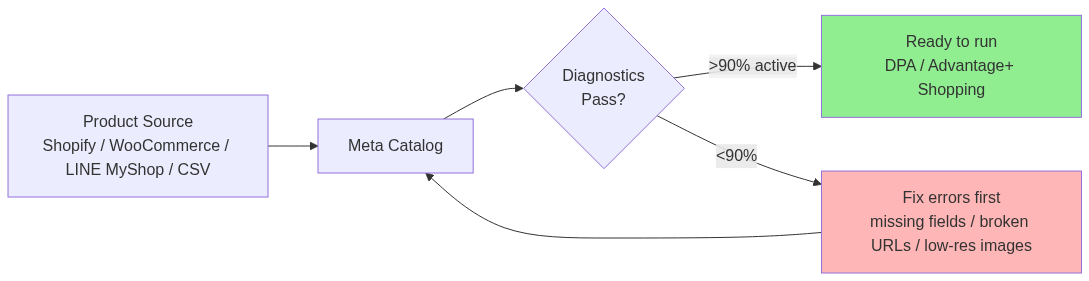
- Data Feed (CSV/XML/Google Sheets) — auto refresh ทุก 1-24 ชม
- Partner integration — Shopify, WooCommerce, Magento, BigCommerce, LINE MyShop, etc. มี plugin official
TH-specific tips:
– LINE MyShop มี Meta Catalog integration ผ่าน partner (ตรวจ doc ของ LINE)
– Shopee / Lazada ไม่มี native integration — ต้อง export CSV manually หรือใช้ third-party tool
– ตั้งสกุลเงิน THB ตั้งแต่แรก — เปลี่ยนทีหลังต้องสร้าง catalog ใหม่
Required fields (อย่าลืม)
id(SKU) — ห้ามซ้ำtitle— keyword-rich, <70 ตัวอักษรdescriptionavailability—in stock/out of stock/preordercondition—new/usedprice— รวมสกุลเงิน เช่น “1290 THB”link— URL ของ product page (UTM tagged)image_link— URL รูปหลัก (≥500×500px)brandgoogle_product_categoryหรือfb_product_category
Diagnostic ก่อน run ads
ใน Commerce Manager → Catalog → Diagnostics. เช็ค:
– จำนวน product ที่ active vs warning vs error
– Missing fields
– Image quality issues
– Out-of-stock items
ถ้า > 10% มี error → fix ก่อน. ระบบเอา error product ไปเสนอ user ผลคือ ROAS แย่
Advantage+ Shopping Campaigns (ASC) — Default playbook ปี 2026
ปี 2024-2025 Meta ผลัก ASC อย่างหนักจนกลายเป็น default สำหรับ B2C ปี 2026. ถ้ายังใช้ Manual campaigns อย่างเดียว → คุณทิ้ง 20-40% performance
ASC คืออะไร
Campaign ประเภทใหม่ที่ Meta จัดการเอง 90% — เลือกสินค้า, audience, placements, creative rotation ให้ทั้งหมด. คุณตั้งแค่:
– Budget
– Target country (ไทย)
– Catalog
– Audience exclusion (optional)
– Creative pool (Meta จะรวม + test)
ASC vs Manual Catalog Campaign
| Factor | ASC | Manual |
|---|---|---|
| Audience targeting | Auto (broad + signals) | Manual (interests, behaviors, custom audiences) |
| Existing customer cap | Yes (default 50%) | Manual rule |
| Creative testing | Auto rotation | Manual A/B test |
| Budget allocation | Auto across creatives | Manual ad set budget |
| Best for | Scaling proven catalog | Niche segments, testing creative angles |
| ROAS ceiling | High (with enough signal) | Higher if optimized perfectly, but harder |
When ASC works best
- มี catalog ≥ 50 active SKUs
- มี Pixel + CAPI signal ดี (purchase events ≥ 50/วัน)
- Budget ≥ 1,000 บาท/วัน ต่อ ASC
- Creative pool ≥ 10 variations
When Manual ยังดีกว่า
- Niche product (luxury, B2B-leaning B2C)
- New product launch (ไม่มี signal เพียงพอ)
- Test creative angle ใหม่
- ต้อง granular control (geo, time-of-day, specific placement)
Best practice ไทย 2026: Run ASC เป็น 60-70% budget + Manual campaigns 30-40% สำหรับ specific use cases (new launch, prospecting niche, retargeting specific behaviors)
Dynamic Product Ads (DPA) — Retargeting machine
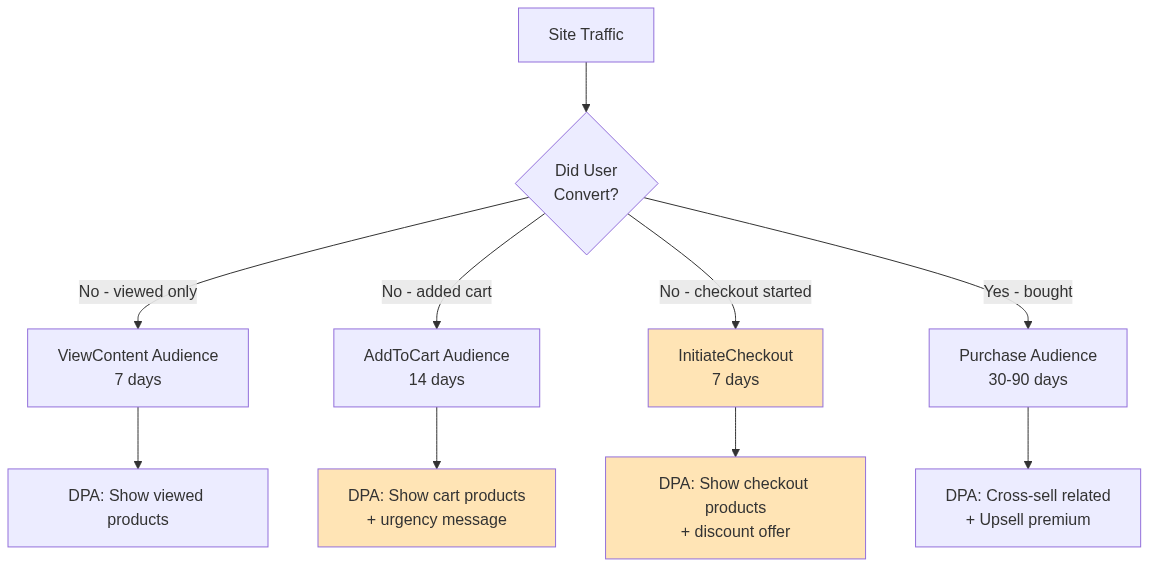
DPA = แสดงสินค้าที่ user เคยดู / เคยใส่ตะกร้า / เคยซื้อ กลับมาให้เห็นบน Facebook/Instagram/Audience Network
DPA Audience tiers
ที่ effective ที่สุดใน TH market:
- ViewContent (last 7 days, no purchase) — แสดงสินค้าที่ดูแล้วยังไม่ซื้อ
- AddToCart (last 14 days, no purchase) — Cart abandoners — ROAS สูงสุด
- InitiateCheckout (last 7 days, no purchase) — Checkout abandoners — ใกล้ปิดดีล
- Purchase (last 30-90 days) — Cross-sell / Upsell
- Purchase (last 180-365 days) — Win-back
Budget split สำหรับ DPA
ลำดับความสำคัญตาม ROAS:
1. InitiateCheckout abandoners (highest ROAS, smallest audience)
2. AddToCart abandoners (high ROAS, mid audience)
3. ViewContent (medium ROAS, large audience)
4. Cross-sell to purchasers (high ROAS if you have variety)
Pixel + Conversion API for E-commerce
Meta Ads B2C ต้องการ signal ที่แม่นยำ มากกว่า B2B — เพราะ optimization model ต้องเรียนรู้จาก purchase events ที่เกิดถี่กว่า
Required Events สำหรับ B2C
| Event | When | Critical? |
|---|---|---|
PageView |
ทุกหน้า | Yes |
ViewContent |
User เปิด product page | Yes (DPA needs this) |
AddToCart |
User กดใส่ตะกร้า | Yes |
InitiateCheckout |
User เริ่ม checkout flow | Yes |
AddPaymentInfo |
User กรอกข้อมูลบัตร | Nice to have |
Purchase |
Order complete | Yes (the most important) |
Conversion API (CAPI) — must-have
iOS 17 + browser ad blocker + ITP ทำให้ Pixel ฝั่ง browser ส่ง event ไปไม่ครบ. CAPI = server-side tracking ส่งจาก server ของคุณตรงไปยัง Meta. Event coverage เพิ่มขึ้นอย่างชัดเจนจาก Pixel เพียงอย่างเดียว → (Pixel + CAPI)
Setup options (เรียงจากง่ายไปยาก)
- Partner Integration — Shopify / WooCommerce / Magento มี plugin official 1-click
- GTM Server-side Tagging — server-side container ของ Google Tag Manager → ส่ง event ทั้ง Meta + Google + TikTok พร้อมกัน
- Direct API integration — custom code, max flexibility, ต้อง dev resource
Deduplication — สำคัญมาก
ถ้าทั้ง Pixel และ CAPI ส่ง event เดียวกัน → Meta นับซ้ำ → ROAS โกหก. ต้อง:
– ส่ง event_id เดียวกันทั้งฝั่ง browser และ server
– Meta จะ dedupe อัตโนมัติเมื่อเจอ event_id ซ้ำ
TH gotcha: ถ้าใช้ payment gateway แบบ Omise / 2C2P / Stripe — event
Purchaseอาจไม่ fire ถูกเพราะ redirect off-site แล้วกลับ. ต้อง:
– Track Purchase ที่ thank-you page ฝั่ง server (CAPI) ไม่ใช่ Pixel
– หรือ verify URL redirect กลับมาที่ same domain เสมอ
Creative Formula สำหรับ B2C ไทย ปี 2026
Creative คือ #1 lever ที่ค้ำ ROAS ใน Meta B2C ปี 2026. Algorithm จัดการ targeting ให้แล้ว, ที่เหลือคือคุณป้อน creative ดีๆ ให้มัน
3 creative angles ที่ proven
1. UGC (User-Generated Content) style
- 15-30 วินาที, แนวตั้ง 9:16
- คนจริงพูดถึงสินค้า (ลูกค้าจริง > pay actor)
- Hook 3 วิแรก: “ฉันเสียดายมากที่ไม่ซื้ออันนี้เร็วกว่านี้…” / “ลองมา 3 เดือนแล้ว…”
- Show product in use, ไม่ใช่ studio shot
- CTA ตอนท้ายเบาๆ: “ลองดูใน link”
2. Product Showcase + Benefit
- Static image หรือ short video (6-15 วิ)
- Product clear, 1 main benefit เด่นชัด
- Price visible (สำคัญสำหรับ TH market)
- Text overlay ขนาดใหญ่อ่านได้แม้ scroll เร็ว
3. Comparison / Before-After
- Slide 1: ปัญหา (พื้นผิวสกปรก / ผมเสีย / ฯลฯ)
- Slide 2-3: Solution = สินค้าเรา
- Slide 4: Result (after photo)
- Slide 5: Price + CTA
Volume > Polish
Pre-pandemic agency advice: “1 hero creative, refine มันให้สมบูรณ์แบบ”
Post-2023 reality: “30 creatives, ทดสอบเร็ว, ตัด loser ใน 3 วัน“
Meta ผลักด้วย Advantage+ Creative — ส่ง creative pool แล้วระบบเลือก winner. ดังนั้น:
– ทำ creative 30+ variation ใน 1 สัปดาห์
– Refresh creative pool ทุก 2-4 สัปดาห์
– Use AI tools (Midjourney, Runway, Sora) สำหรับ variation
TH-specific creative tips
- ใช้ ภาษาไทยใน hook (3 วิแรก) — engagement ดีกว่า English
- ราคาแสดงชัด — TH consumers ตัดสินใจที่ราคามากกว่า US
- Free shipping prominently — TH e-com expectation
- LINE icon ใน CTA ถ้าคุยต่อใน LINE — รู้สึกใกล้กว่า “Shop Now” button
- เลขรีวิว / ดาว ถ้ามี — social proof สำคัญ
BFCM / Big Day Playbook (Lazada 9.9, Shopee 11.11, etc.)
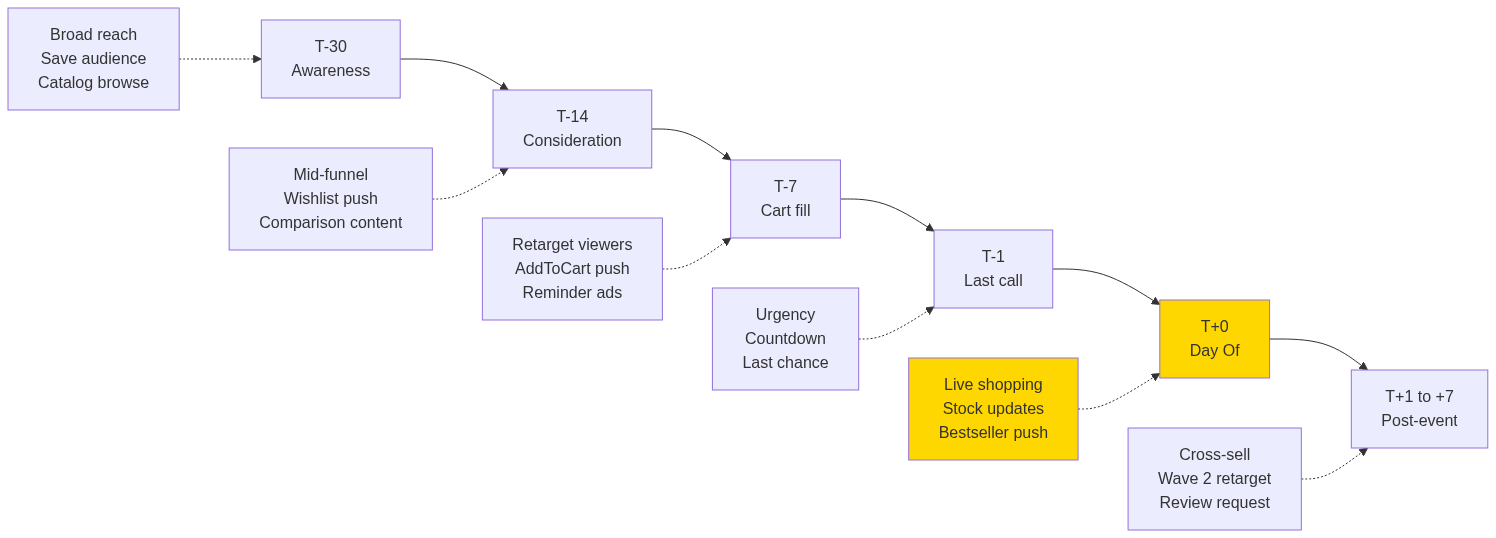
วัน big day ในไทย — 9.9, 11.11, 12.12, BFCM (Nov 28-Dec 2) — คือเวลาที่ Meta Ads B2C ทำเงินเยอะที่สุด
Timeline (T-30 → T+7)
Budget pacing (typical TH big day)
- T-30 to T-15: 20% of total budget (awareness)
- T-14 to T-2: 30% of total budget (consideration + cart fill)
- T-1 to T+0: 40% of total budget (closing push)
- T+1 to T+7: 10% of total budget (post-event retarget)
Audience tiering for big day
- Past purchasers (P30-P180) — bid 2-3× normal, highest ROAS
- AddToCart abandoners (last 30 days) — bid 1.5-2× normal
- Wishlist / Save — bid 1.2× normal
- Broad prospecting — normal bid, large volume
Cross-platform: Meta + Shopee/Lazada + LINE MyShop
TH consumers don’t shop on Meta directly — they discover on Meta, then convert on Shopee/Lazada/LINE-MyShop/own website
Strategy by platform
Own website (best ROAS, hardest to scale):
– Direct DPA → website
– Full attribution via Pixel + CAPI
– Best for: high-margin, brand-led, repeat customers
Shopee / Lazada (high volume, low margin):
– Meta ad → click goes to Shopee listing
– Attribution: harder. Use UTM + Shopee Analytics, or use Shopee’s Meta integration (limited)
– Best for: commodity products, broad audience
LINE MyShop (mid-volume, mid-margin, TH-specific):
– Meta ad → LINE OA → MyShop checkout
– Attribution: track via LINE OA messages opened, MyShop dashboard
– Best for: mid-priced, requires consultation (cosmetics, fashion, supplements)
Recommended split
ไม่มีคำตอบเดียว แต่ template เริ่มต้น:
– Own website: 50% (highest ROAS focus)
– Marketplace (Shopee/Lazada): 30% (volume + new customer acquisition)
– LINE MyShop: 20% (TH-specific moat)
ROAS Benchmark ไทย 2026 (B2C / E-commerce)
ตัวเลขเฉลี่ยที่เห็นจริงในตลาด (อ้างอิงจาก agency reports + own data):
| Category | Cold ROAS | Retarget ROAS | Blended ROAS |
|---|---|---|---|
| Fashion / Apparel | 2.5-4× | 5-8× | 3-5× |
| Beauty / Cosmetics | 3-5× | 6-10× | 4-6× |
| Electronics | 4-7× | 8-15× | 5-9× |
| Food / Beverage (D2C) | 1.5-3× | 3-5× | 2-4× |
| Supplements | 2-4× | 4-8× | 3-5× |
| Home & Living | 3-5× | 6-10× | 4-6× |
ตัวเลขนี้คือ last-click attribution บน Pixel + CAPI. ถ้าใช้ MMM หรือ incrementality test, ตัวเลขจริงอาจต่ำกว่านี้พอสมควร
ถ้า ROAS ต่ำ — diagnostic
- <1.5× blended → Catalog issue / Pixel broken / wrong audience
- 1.5-2.5× blended → Creative tired / overcrowded retargeting / pricing issue
- >3× blended → Healthy, push budget +20-30%
Measurement: ไม่หลงทาง ROAS
Sources of truth (เรียงตามความเชื่อถือ)
- Bank statement / Shopify dashboard / Lazada Seller Center — actual revenue
- GA4 e-commerce events — second source, cross-platform
- Meta Ads Manager — Meta’s attribution (last-click 7d/1d default)
- Last but verify — UTM-based attribution in custom dashboard
Common pitfalls
- Trust Meta ROAS only → over-credit Meta (especially in TH where LINE/Marketplace are heavy)
- Ignore organic / direct → over-spend paid
- No incrementality test → never know true incremental ROAS
- Compare different attribution windows → 7-day vs 1-day apples-to-oranges
Recommended setup
- GA4 with enhanced e-commerce tracking
- Meta Ads Manager + custom columns for AOV, CPM, CPP
- Monthly MMM (Marketing Mix Modeling) if spending >100k บาท/เดือน
- Quarterly incrementality test (geo holdout or audience holdout)
Common Mistakes ที่เห็นบ่อยใน TH B2C
- Catalog ไม่ update — Out-of-stock products ยัง run ads → wasted spend + bad UX
- ไม่ใช้ CAPI → signal loss 30-40% → algorithm เรียนรู้ผิด
- Creative ไม่ refresh — เห็นซ้ำ 3-4 สัปดาห์ → creative fatigue → CPM พุ่ง
- Optimize ที่ AddToCart แทน Purchase — Algorithm ไปจูง user ที่ใส่ตะกร้าแต่ไม่ซื้อ
- Retarget window กว้างเกินไป — 90 วันสำหรับ impulse purchase = waste budget
- Ignore LINE flow — TH consumers ใช้ LINE มาก ละเลย LINE-MyShop path ก็ทิ้งโอกาส
- No exclusion list — Run prospecting แต่ไม่ exclude purchasers → waste
- Bid setting wrong — ใช้ Manual bidding ตอนยังไม่มี data → underdeliver
Quick Start Checklist (B2C / E-commerce ใหม่)
Week 1 — Foundation
- [ ] Setup Catalog ใน Commerce Manager (ผ่าน Shopify/Woo integration)
- [ ] Verify Pixel + CAPI installed (test ผ่าน Test Events tool)
- [ ] Setup standard events: ViewContent, AddToCart, InitiateCheckout, Purchase
- [ ] Verify catalog diagnostics ≥ 95% active
- [ ] Setup GA4 e-commerce tracking
Week 2 — First Campaigns
- [ ] Launch Advantage+ Shopping with 1,000-3,000 บาท/วัน
- [ ] Launch DPA retarget (ViewContent 7d, AddToCart 14d)
- [ ] Upload 10-15 creative variations (UGC + Product + Comparison)
- [ ] Setup naming convention:
[Audience]_[Creative-Type]_[Date]
Week 3-4 — Optimize
- [ ] Review ROAS by ad set (kill <1.5× cold, <3× retarget)
- [ ] Refresh creative — add 10 new variations
- [ ] Test new audience (interest, lookalike, etc.) in Manual campaign
- [ ] Setup BFCM playbook if event ใกล้
Month 2+
- [ ] Add Conversions API events (Purchase server-side)
- [ ] Add cross-sell campaign for past purchasers
- [ ] Test Advantage+ Creative (let Meta combine your assets)
- [ ] Start incrementality testing (audience holdout 10%)
บทความที่เกี่ยวข้อง
- Meta Ads สำหรับ B2B ในไทย ปี 2026 — ถ้าคุณทำทั้ง B2B และ B2C
- MarTech Analytics & Tracking Guide — Pixel + CAPI + GA4 setup ละเอียด
- AI in Marketing Guide — AI creative generation, audience suggestion
- In-house vs Agency Cost Analysis — เลือกทำเองหรือจ้าง
Key Takeaways (สรุป): Meta Ads B2C ปี 2026 = Catalog-first + Signal-rich (Pixel+CAPI) + Creative-fast (30/wk) + ASC-default. ตามด้วย DPA retargeting tiered, BFCM playbook ที่ pace 30 วัน, และ cross-platform integration กับ Shopee/Lazada/LINE-MyShop. ROAS benchmark TH 3-5× blended สำหรับ healthy account
บทความที่เกี่ยวข้อง
- Meta Ads Complete Guide สำหรับ B2B ในไทย ปี 2026 — Pillar Hub
- Meta Ads B2B: Lead Form vs Landing Page อันไหนคุ้ม 2026